
English| EUR
Suggested for you
More currencies
Choose a language
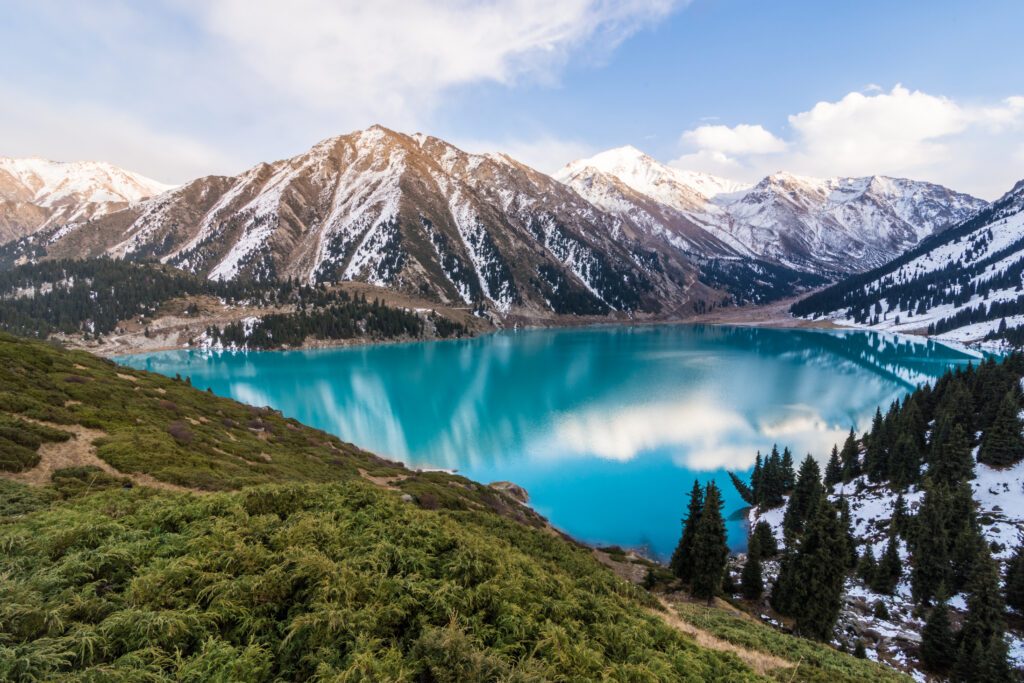
Big Almaty Lake sits open to visitors every day of the year, but the timing of your arrival shapes everything from water color to crowd density. The alpine reservoir operates within Ile-Alatau National Park, where access depends less on gates than on daylight, weather, and the mountain road that climbs 2,500 meters above the city.
Quick answer
Big Almaty Lake maintains 24-hour access seven days a week throughout the year. The park eco-post collects a 600 KZT conservation fee per person during staffed hours. Morning arrivals between 09:00 and 11:00 offer the clearest light and most vivid turquoise water tones, while afternoon cloud cover and wind often obscure the lake's signature color.
The alpine reservoir holds 6.3 million cubic meters of glacial melt at an elevation of 2,511 meters, and unlike urban attractions with turnstiles and closing bells, the site never locks its perimeter. Alma opening hours reflect the park's continuous-access model: no barriers prevent early-morning photographers or late-evening hikers from reaching the shoreline, though the unpaved access road demands caution after dark and becomes impassable during heavy snow between November and April. The conservation fee checkpoint operates during daylight hours, typically from dawn until dusk, but visitors who arrive outside staffed periods are expected to pay on their next park visit. The lake's appearance changes drastically across the day—morning sun illuminates the calcium carbonate particles suspended in the glacial water, producing the intense turquoise that defines every postcard image, while midday heat stirs winds that ripple the surface and scatter the light. Photographers and first-time visitors who ignore the recommended arrival window often leave disappointed, mistaking the lake's gray afternoon face for its only expression. Seasonal road conditions impose the real limits on access. The 28-kilometer route from Almaty's southern edge climbs through switchbacks that remain snow-free from May through October, but winter closures can strand vehicles or force multi-hour delays as maintenance crews clear avalanche debris. The park authority does not publish advance closure schedules; local weather determines passability day by day. Visitors planning autumn or spring trips should confirm road status the morning of departure, and those arriving during the core summer months—June through September—face the year's heaviest foot traffic, particularly on weekends when Almaty residents drive up in numbers that overwhelm the narrow pullouts along the shore. The lake itself is a municipal water source, which prohibits swimming, wading, and any direct contact with the reservoir. Rangers patrol the accessible shoreline and issue fines for violations, a policy that has quietly reduced the site's appeal for families expecting a recreational swim but preserved the water quality that gives the lake its clarity. The turquoise hue depends on the angle of sunlight and the concentration of suspended minerals, which means the same viewpoint can look dull under clouds and radiant under clear skies an hour later.
“The turquoise hue depends on the angle of sunlight and the concentration of suspended minerals, which means the same viewpoint can look dull under clouds and radiant under clear skies an hour later.”
Big Almaty Lake is accessible to visitors throughout the week. The park remains open daily to accommodate public access.
The best arrival window is 09:00–11:00, as morning light provides the clearest views and best water color for photography. Visiting during this timeframe helps avoid the midday influx and captures the lake at its most reflective state.
—
Quiet conditions allow for steady tripod work and unobstructed views of the glacial water.
15°C to 25°C
Warm summer days bring larger crowds but offer full access to surrounding trails.
5°C to 15°C
Autumn months provide stable weather and clear skies, which are optimal for high-contrast photography.
-10°C to 5°C
Winter access is limited by snow and ice, often resulting in frozen lake surfaces and difficult terrain.
Verdict: The best slot is between 09:00–11:00 on weekdays during September or October for clear lighting and manageable visitor density.
Big Almaty Lake is located within Ile-Alatau National Park and is most reliably reached via private vehicle or taxi. Public transportation does not provide direct access to the lake, requiring visitors to arrange transport for the final ascent through the mountain roads.
Drive via Alma-Arasan Street toward Ile-Alatau National Park
Direct hire from Almaty city center to the lake eco-post
Hiking from the Alma-Arasan eco-post along the main road
While the site is accessible 24/7, the mountain road conditions can change rapidly. Arrange your transportation in advance to ensure reliable transit to and from the remote park entrance.
Big Almaty Lake sits at 2,511 meters, where weather shifts quickly and the eco-post requires documentation.
Everything you need to know about alma opening hours
The lake is accessible daily with alma opening hours set from 00:00 to 23:59. This continuous access allows visitors to plan their trip according to their own schedule within Ile-Alatau National Park.
Yes, there is an entrance fee of 600 KZT per person. This conservation fee is collected at the park eco-post to support the maintenance of the protected area.
The best arrival window is between 09:00 and 11:00. During these hours, the morning light provides the clearest views and the most vibrant water color for photography.
Yes, the alma opening hours remain consistent throughout the week, including Saturdays and Sundays. You can access the lake at any time during these days without seasonal hour shifts.
The local Almaty tourism sites, including this high-altitude reservoir, follow the standard access protocols provided by the national park authorities. While you can verify the alma opening hours online, the park gates maintain 24-hour accessibility.
While the site permits entry 24 hours a day, it is recommended to visit during daylight for safety and visibility. Please note that road conditions may vary depending on weather and the time of year.
The official location is the Ile-Alatau National Park, Almaty, Kazakhstan. You will encounter the eco-post where the conservation fee is processed upon arrival at the park boundaries.